Free Online Wordle Assistant
Our Wordle Assistant helps you solve today's puzzle in seconds. This free online tool works as a Wordle solver, Wordle helper, and word finder all in one place. No download required, no ad-free tool interruptions, just a simple browser-based tool that fits on any screen.
This guide gives you a full introduction to smart puzzle solving. Whether you're just starting playing or you've been sharing your results for months, this fantastic finder gives you an edge. You'll find hints, answers, and winning strategies for every puzzle you face.
We built this resource to make word games more fun, not less. Our mobile-friendly solver works on your phone, tablet, or laptop. Searching for quick solutions? Exploring new strategies? This page covers it all.
Below, you'll find comprehensive strategies for unlocking your full puzzle-solving potential. From basic rules to expert tricks, this experience is designed to make you a stronger player. Use the Wordle Assistant today and turn every guess into progress.
What Is a Wordle Assistant (Solver)?
A Wordle solver is a smart tool that narrows down word choices based on your guesses. Think of it as a Wordle helper that removes the guesswork. Some call it a Wordle cheat, but it works more like a Wordle hint generator than a simple answer machine.
At its core, this Wordle answer finder acts as a word narrowing tool. You enter what you know, and it applies an elimination strategy to shrink your options. It's a true guess optimizer built for daily play.
Here's what makes it work:
- Hint system – gives clues without spoiling the fun
- Clue generator – builds suggestions from your input
- Spoiler-free hints – guides you without revealing everything at once
- Real-time solver – updates results instantly
The engine behind this word suggestion tool relies on an algorithm rooted in probability. It uses entropy calculation and basic information theory to rank the best possible guesses. Every suggestion pulls from a massive word bank built on English dictionary words and Scrabble dictionary entries.
When you type in your clues, the tool checks a possible words list against a remaining word list. It filters out anything that doesn't match, leaving only a valid word list of real contenders. From there, it points toward the answer word, also known as the target word or hidden word.
This powerful finder does the heavy lifting so you don't have to. It identifies excluded letters, tracks correct positions, and narrows your options with ease. You can focus on promising options instead of guessing blindly. Players who analyze each round with these robust solutions often master the daily challenge faster than those going in cold.
How to Use Our Wordle Assistant
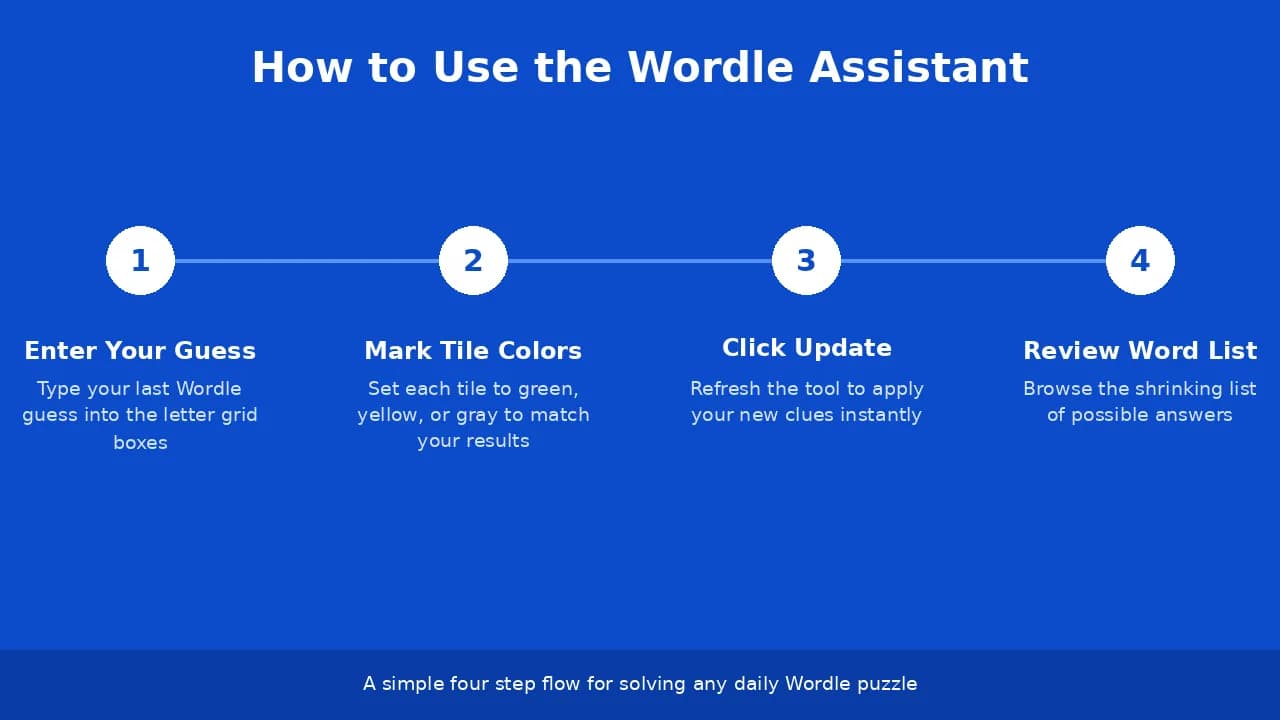
Using the Wordle Assistant takes less than a minute. Start by typing your last guess into the search bar. From there, the input field connects to an on-screen keyboard and letter grid, so you can filter by letter or filter by position with just a few clicks.
Follow these steps:
- Enter your guess into the text boxes on the letter grid.
- Mark each tile based on your actual Wordle results:
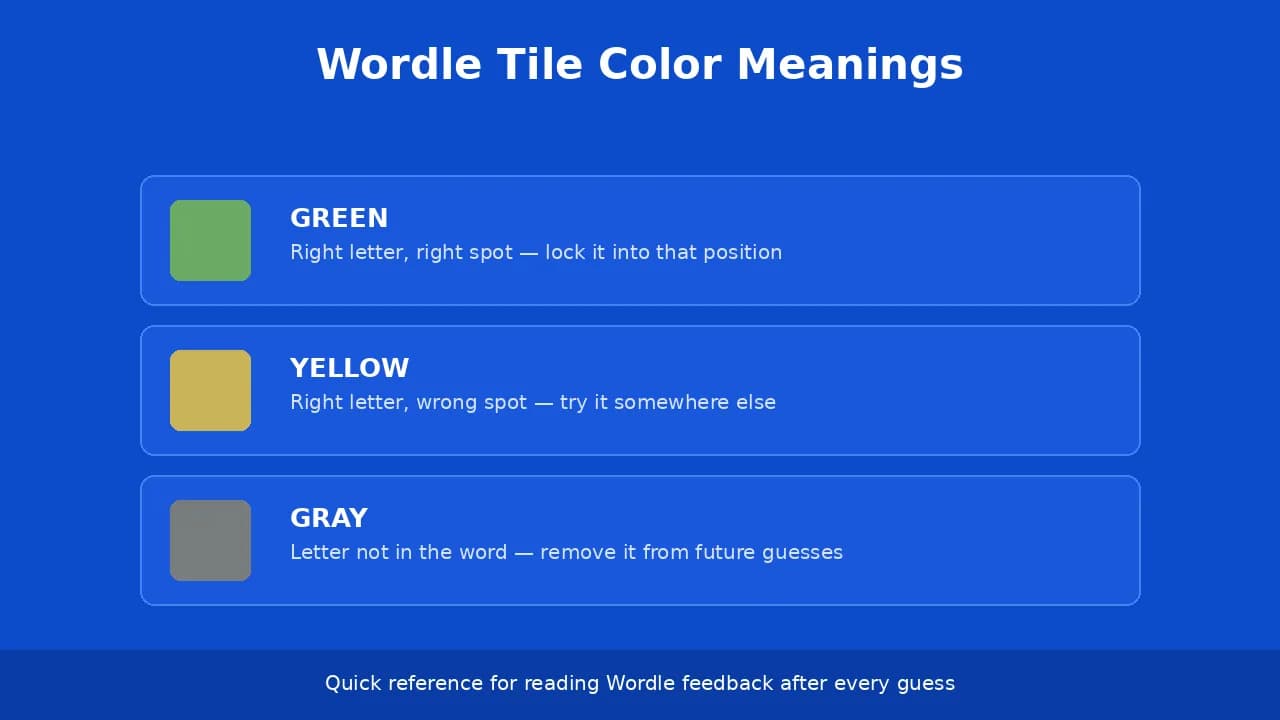
- Green tile = correct letter, correct position
- Yellow tile = correct letter, wrong position
- Gray tile = letter not in word
- Click the update button to refresh results.
- Review the possible words list generated below.
The tool tracks known letters, excluded letters, and included letters as you go. It remembers letter position and letter placement, building a word pattern through pattern matching. When you mark green letters, it locks that letter into the correct spot on the board. Yellow valid letters get placed in a box, showing the letter is contained in the word but needs a new slot. Bad letters get marked dark gray and removed from future suggestions entirely.
Check the Best Possible Letters section next. This area uses suggest probability to prioritize your next guess. As you enter more clues, the possible words list shrinks with each round, and bad words disappear from the entry boxes.
Here's a quick summary of the color coding:
| Tile Color | Meaning |
|---|---|
| Green | Right letter, right spot |
| Yellow | Right letter, wrong spot |
| Gray | Letter not in the word |
This customization ensures you receive hints tailored to your unique puzzle. Stuck on a tricky tile? Explore the keyboard screen to eliminate options fast. As board slots open up, mixing and matching color coding becomes second nature. Just keep clicking, matching results, and selecting colors until the answer narrows down to one strong choice. This daily companion turns every clue into progress toward the correct answer.
What Is Wordle?
Wordle is a five-letter word game that took the internet by storm. Created as a simple game by a software engineer, it grew from a personal project into a worldwide hit. Today, it's published daily under the New York Times word game brand, often called NYT Wordle by fans.
The rules stay simple. Every day, a new word puzzle game drops with a fresh puzzle number. Players get a guess limit of six guesses, or six tries, to find the answer. That's it. No timers, no levels, just one puzzle per day.
Josh Wardle built this game for his partner, a fellow word games lover. What started as a fun gift between two people turned into a global craze. The colorful grid and clean online design made it easy to pick up and hard to put down.
Wordle stands out because it's:
- Free to play
- Educational for building vocabulary
- Universal in its simple design
- Daily, with one puzzle refreshed every 24 hours
As word spread, communities formed around shared scores and daily streaks. The user base grew fast, turning casual players into a dedicated fan base. Friends compared answers, families competed for the fastest solve, and the game spread across social platforms. What began as a quiet creation between two people became a shared ritual for millions of players worldwide.
How to Play Wordle
Playing Wordle is easy once you know the goal. Your aim is simple: guess the correct five-letter word within six guesses. Enter any real word to start, then check your results.
After each guess, letters turn color-coded:
- Green means the letter sits in the correct position
- Yellow means the letter is correct but placed wrong
- Gray means the letter doesn't belong in the word at all
These guessing colors inform your next move. Each new guess should lock in more correct letters based on what you learned. If you guess correctly before your six tries run out, you win. If not, the answer gets revealed after your sixth guess.
The official Wordle offers one puzzle per day. But if you want unlimited variant knowledge, other versions let you play multiple rounds. Either way, using tricks and tips from experienced players makes for an easy win far more often than guessing at random.
25 Best Starting Words for Wordle
Your starting word sets the tone for the entire puzzle. A strong first guess strategy can make the rest of your guesses much easier. The best starting word usually includes five different letters and at least two vowels, giving you more clues right away.
Choosing the right optimal opening word is crucial for playing at your best. It boosts your chances to find the daily answer faster. Words packed with common five-letter words patterns tend to work better than obscure choices.
Here are qualities to look for in a starting word:
- Contains vowels like A, E, or O
- Uses common consonants such as R, S, T, or N
- Avoids repeated letters
- Mixes vowel placement and consonant placement across the word
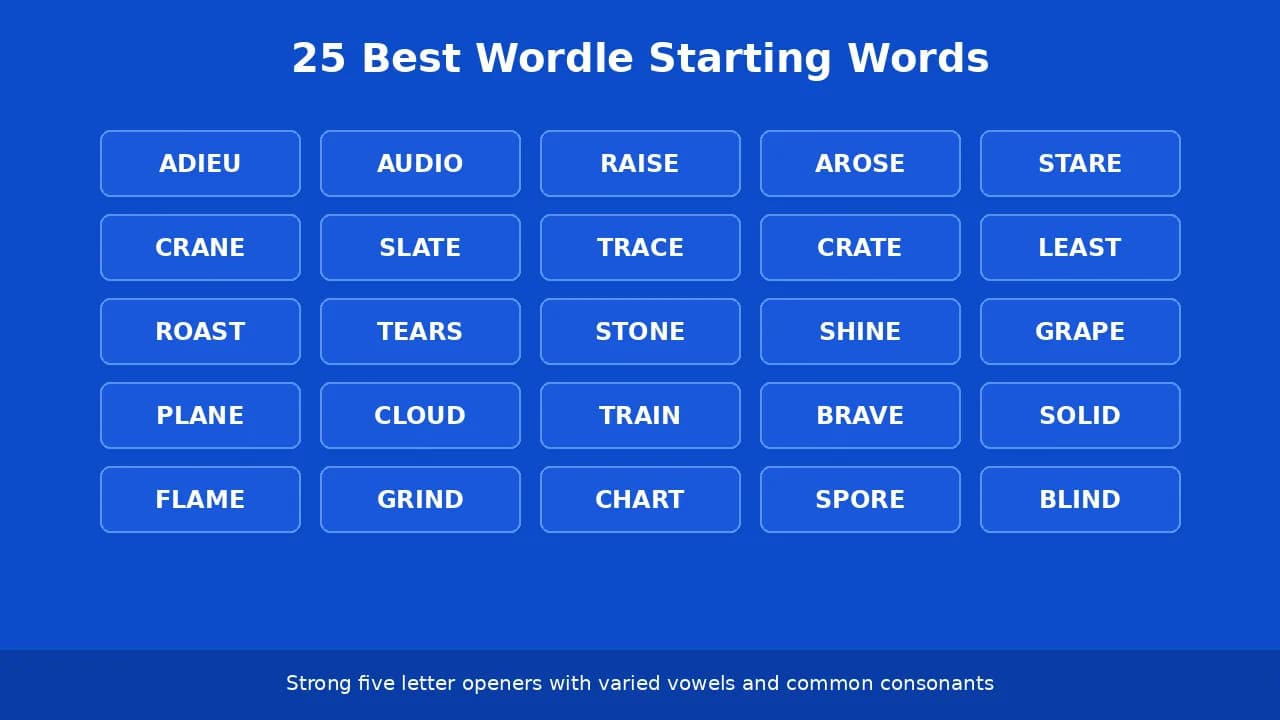
Below is a curated list of 25 strong openers, based on common five-letter everyday words:
Every word games fan can learn from testing a few of these. Once you figure out which pattern feels natural to you, stick with it. That habit alone helps you find the answer faster every time you play.
Wordle Tips, Tricks & Strategies
Feeling stuck on Wordle? You're not alone. Many players find the tricks and tips daunting at first, especially when the puzzle feels hard. But a little strategy removes the stress fast.
Start by thinking about letter combinations instead of full words. Avoid guessing five-letter words with double letters or repeated letters early on, since they narrow your options too fast. Instead, spread out your guesses to test more of the alphabet.
Here's how to sharpen your Wordle strategy:
- Sort specific letters you've already confirmed
- Combine valuable tools with your own language knowledge
- Restrict words based on gray and yellow clues
- Think bigger instead of guessing the first word that comes to mind
This Wordle guide isn't about finding a shortcut to cheat. It's about learning how to think better with each guess. Mastering the game takes practice, but every round teaches you something new about word structure. Use a unscramble words tool when you're stuck, then apply that knowledge to your very next puzzle. Over time, these small habits improve game scores and make solving five-letter words feel natural instead of stressful.
Most Common Letters in Wordle
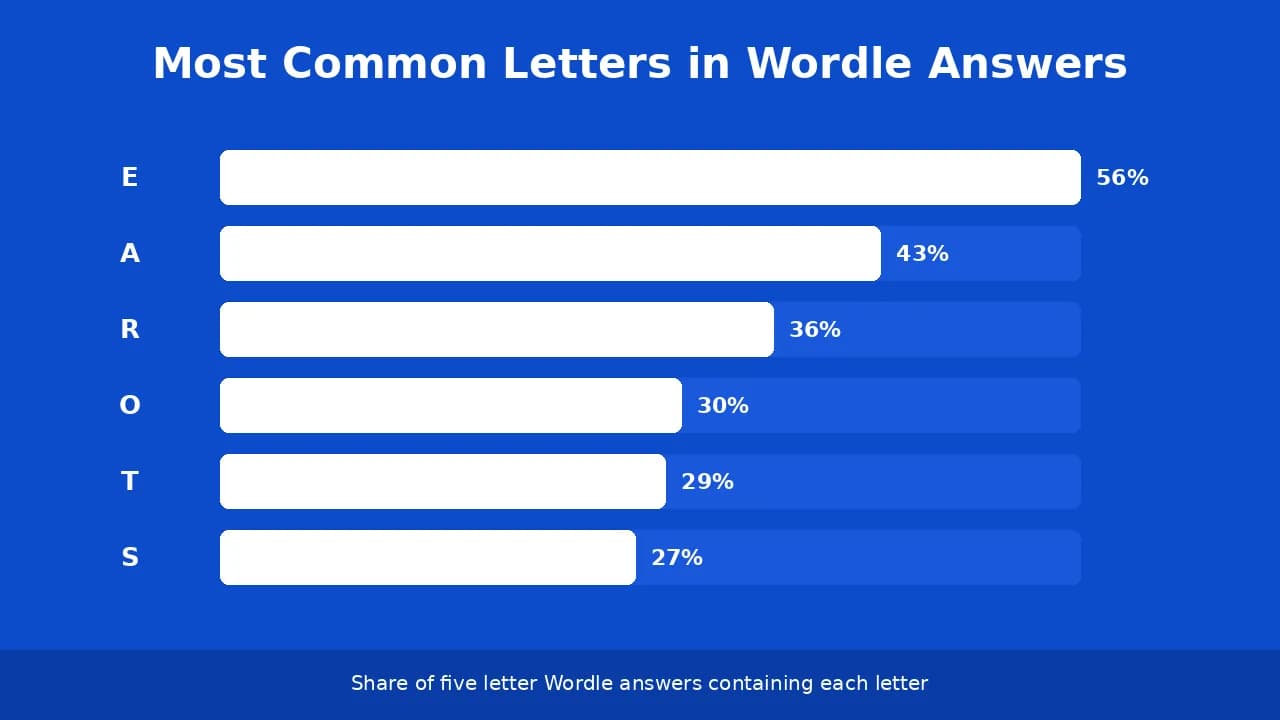
English words rely heavily on a small set of letters, and knowing them gives you an edge. The most common letters include E, A, R, O, and T, which show up in a huge share of five-letter words. Common starting letters in English also lean toward S, C, and P.
Letter frequency and word frequency both matter here. Vowels like A and E appear more often than rare letters like Q, X, or Z. Common consonants such as N, R, and S also show up constantly. When you see green letters landing in the correct spot early, or a yellow letter pointing to the right consonant, you're already ahead. Watch out for repeated letters and grey letters too, since they help you rule out entire word groups fast.
Wordle Word Finder
A word finder acts like a built-in word unscrambler or anagram solver for tricky puzzles. Think of it as a crossword solver helper made specifically for five-letter word games. It runs a letter pattern search across thousands of options in seconds.
These refined search tools help you find a five-letter word using specific characters you already know. You can also exclude letters you've ruled out, making the list even shorter. This invaluable tool shines when you struggle with specific letters or face complicated words that don't follow common patterns. Just filter by letter, filter by position, and let the results guide your next guess.
Think Outside the Box
Sometimes the answer isn't the obvious choice. Use your knowledge of language to restrict words that don't fit, then think bigger about what's left. Learning to think better means looking past your first instinct.
A good word finder can help here, but so can your own instincts. Mastering the game means testing five-letter words you wouldn't normally guess. Always double-check previous guesses before typing a new one. This opens up opportunities you might have missed, revealing potential letters and even a potential word hiding in plain sight within your remaining guesses.
How Did Wordle Become So Popular?
Wordle's rise started small. Josh Wardle, a software engineer, built the game during quarantine as a gift for his partner. It was never meant to become a giant word games hit, just something fun for family and a small group to enjoy together.
Word spread fast. Within weeks, it reached a global audience and became a true puzzling phenomenon. Part of the appeal came from its clean interface. There was no monetization, no data tracking gimmicks, just a simple daily puzzle that respected daily players' time.
Every morning, new puzzle drops brought fresh excitement. Media outlets covered the trend widely, praising how it built on players' English language words repertoire without feeling like schoolwork. That balance of content and fun helped it expand far beyond word game fans, even reaching people who normally avoid puzzles due to stress or anxiety.
A few features drove the viral trends behind its worldwide hit status:
- Wordle streak tracking that rewarded daily play
- Guess distribution charts showing win percentage
- Wordle statistics that players loved comparing
- Share results feature using a Wordle grid share format
- Emoji grid sharing that spread across social media sharing platforms
This daily challenge became a form of brain training for millions. People saw it as a cognitive game and brain teaser rolled into one, a small vocabulary builder they could finish in minutes. Puzzle enthusiasts and casual gamers both found a home in the growing word game community.
Success also sparked variety. New Wordle variants appeared quickly, including Quordle solver challenges, Octordle, Dordle, Nerdle, Heardle, Absurdle, Squabble, and Lewdle. Each one borrowed the same word game genre formula while adding its own twist, like Squaredle's grid-based anagram style challenges. Players looking for other word challenges also enjoy our Spelling Bee helper, Wordscapes solver, Word Cookies cheat, Wordiply solver, Text Twist solver, Jumble solver, 4 Pics 1 Word solver, Words with Friends, Word Chums helper, Wordfeud helper, or fun generators like random word generator, random letter generator, Pictionary word generator, party charades generator, and word name combiner.
That mix of simplicity, sharing, and daily habit turned one small gift into a lasting cultural moment, and it's exactly why tools like our Wordle Assistant continue to support players chasing their next win.
FAQs
Can I use the Wordle solver for today's Wordle puzzle?+
Yes, our Wordle Assistant works perfectly for today's puzzle. Just enter your guesses and mark the tile colors as you go. The tool updates instantly, showing fresh word options based on today's clues. No waiting, no delays. It's built for daily use, so you can rely on it every single morning before starting your puzzle.
Does the solver provide hints or just the answers?+
Our Wordle Assistant gives both, depending on what you need. You can request soft hints if you want a nudge, or let it narrow down full word suggestions. It won't force the answer on you. This keeps the game fun while still giving support when you're stuck on a tough round.
Is it considered cheating to use a Wordle solver?+
We don't see it that way. Using the Wordle Assistant is more like getting a study buddy for word games. It helps you learn letter patterns and word structure over time. Plenty of players use it to sharpen skills, not just to win. It's your game, played your way.
Does the Wordle solver work with the New York Times Wordle?+
Absolutely. Our Wordle Assistant matches the same rules used in NYT Wordle. Same word length, same guess limit, same tile colors. Whether you play on the New York Times site or app, you can plug your results straight into our tool without any mismatch or confusion.
Can I access an archive of past Wordle answers?+
Right now, our focus stays on today's puzzle and helping you solve it fast. We don't currently store an archive of past Wordle answers. Our Wordle Assistant works best as a real-time tool, built to support your current guesses rather than looking backward at old solutions.
Is the Wordle solver free to use?+
Yes, completely free. There's no signup, no hidden fees, and no payment wall blocking access. Just open the page and start using the Wordle Assistant right away. We built it as a simple browser tool anyone can use, whenever they get stuck on a puzzle.
Can I use the solver on mobile devices?+
Definitely. Our Wordle Assistant works smoothly on phones, tablets, and desktops alike. The layout adjusts to fit your screen size automatically. Whether you're solving during your commute or relaxing at home, you'll get the same fast, accurate results without needing to download anything extra.
How often is the solver updated?+
We update the Wordle Assistant regularly based on user feedback and word list accuracy. Small tweaks happen often behind the scenes to keep suggestions sharp. If something feels off, we fix it fast. Our goal stays simple: keep the tool reliable every time you open it.