Word & Name Anagram Maker
Use this free anagram generator to turn any word, name, or phrase into a brand-new set of letters. It works online, requires no sign-up, and delivers results in seconds. Whether you need multiple words from a single input or want to generate names for a project, this tool handles it all. It is the best free option available, and it works directly in your browser.
Anagram Generator
This anagram generator is more than just a basic tool. It works as an anagram maker, anagram solver, anagram finder, and anagram creator — all in one place. Think of it as a word unscrambler, a letter unscrambler, and a word rearranger combined into a single, powerful machine.
You enter your letters, and the tool instantly rearranges them into every valid word it can find. It pulls from a large dictionary, checks every possible string and character combination, and returns a sorted list in real time. The fast search algorithm makes sure results appear without delay.
This anagrammer works as a decoder for scrambled text, a letter rearranger for puzzle inputs, and a word patterns finder for game players. It is completely free, requires no download, and runs as a mobile-friendly tool on any device.
Results are sorted alphabetically by default, but you can change the sort order. The list shows all words contained in or containing your input letters. You can limit results, set options, and explore the full output at your own pace. Whether you call it an anagramator, anagramer, or simply an online solver, it does the job well. It is indispensable for anyone who works with language regularly.
How to Use the Anagram Generator
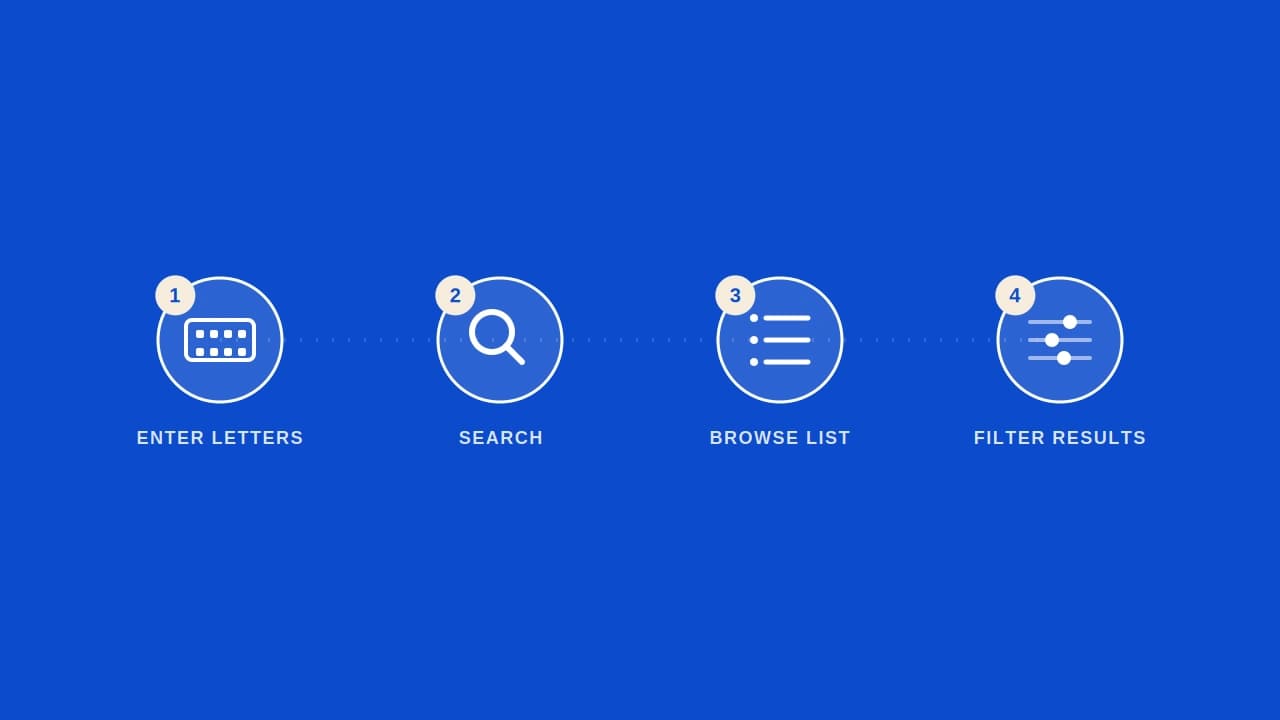
Using this tool is simple. Follow these steps:
- Enter letters in the search bar.
- Click search to start finding words.
- Browse the list of unscrambled words generated instantly.
- Change settings to include or exclude specific results.
You do not need to be an expert at anagramming. Just type your shuffled or scrambled input, and the word scramble solver does the rest. It works as a jumble solver too, so entering a random mix of letters is perfectly fine.
The mixer processes your input fast. Discovering new words from a set of letters takes seconds. You can include or exclude results based on your needs, and the possible output list updates as you go. It is a happy experience for anyone who enjoys wordplay.
Advanced Options & Filters
The advanced filter section gives you full control over your results. Here is what you can adjust:
| Filter Option | What It Does |
|---|---|
| Minimum word length | Sets the shortest word size in results |
| Maximum word length | Sets the longest word size in results |
| Filter by starting letter | Only returns words that start with a particular letter |
| Filter by ending letter | Only returns words that end with a specific letter |
| Sort alphabetically | Orders the full list A to Z |
| Sort by length | Groups results from shortest to longest |
| Sort by score | Ranks words by game value |
| Case sensitive search | Capitalizes or limits results by letter case |
| Wildcards / blank tiles | Use wildcard letters for incomplete inputs |
| Dictionary type | Choose from TWL dictionary, SOWPODS, or Merriam-Webster word list |
Use wildcard letters or blank tiles when you have an incomplete set. The word database covers multiple dictionary types, so results stay relevant to your query. The word list generator pulls from a large, checked collection.
Preselect your options before you search to save time. Remove or delete filters to increase the result count. Selecting reasonable limits keeps the output manageable. The advanced settings exist to help you find pronounceable, valid words without wading through every possible result. Each cell in the filter panel gives you direct control over what gets returned.
Pseudonym & Fake Name Anagram Generator
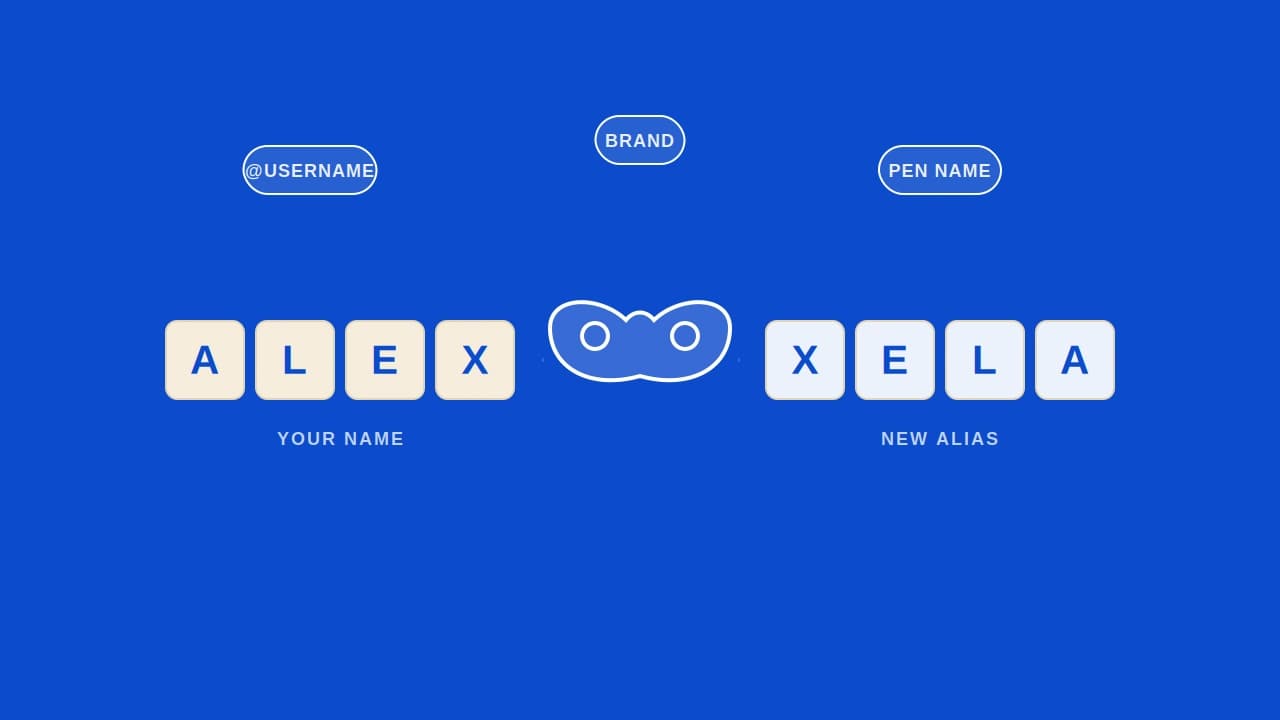
This name anagram generator helps you build pseudonyms, pen names, usernames, and brand names from your real name or any input phrase. It works as a pseudonym generator, a pen name generator, a username generator, and a brand name generator — all from one tool.
You can create a fake surname, a masculine or feminine alias, or a pseudo identity using nothing but rearranged letters. Writers use it as a pen name tool. Marketers use it as a marketing slogan generator and for business name ideas.
Here is what you can generate:
- Single-word anagram — one word formed from your input letters
- Multi-word anagram — a phrase arranged differently from the original
- Perfect anagram — uses every letter exactly once
- Sentence anagram — a full rearrangement of a longer input
- Funny anagrams — playful results great for nicknames or party fun
- Celebrity name anagram — rearrange a famous name into something new
It also works as a phrase anagram generator for places, compound names, female names, and male names. Use it as a brainstorming tool to explore lucrative business name ideas or fantasy usernames. Secret codes and fun aliases are easy to form with this tool. The anagram of my name feature is especially popular — just enter your full name and see what it reveals.
What Is an Anagram?
An anagram is a form of wordplay where the letters of a word or phrase are rearranged to create something new. It sits at the intersection of language, lexicography, and word play, and it appears across history, literature, and education.
For students, teachers, and ESL learners, anagrams work as a vocabulary builder and a vocabulary practice tool. They help with spelling, word structure, phonetics, and orthography. In the field of morphology and etymology, anagrams reveal interesting connections between words.
An anagram is not a palindrome, pangram, isogram, or heteronym — though all of these are related word types worth knowing. Anagrammatic thinking trains the brain to see letter combinations in new ways. The term comes from the Greek word for "letters transposed."
This article gives you useful information about how anagrams work, where they appear, and how the tool supports English language learning. Vowels, consonants, syllables, and alphabet patterns all come into play. The lexicon of any language contains thousands of anagrammatic word pairs hiding in plain sight.
Anagram Definition
An anagram is a word or phrase formed by rearranging the letters of another word or phrase. Every character from the original is retained — nothing is added, and nothing is removed.
The definition is simple: scrambled letters, new meaning. The spelling changes, but the letter count stays the same. This is the core rule of anagram morphology.
Here is a basic example:
A single permutation of six letters produces an entirely different word. The disorder of the original characters creates something new. Orthography stays consistent — only the order changes. No new code is proposed, and no letters are invented.
Where Are Anagrams Used?
Anagrams appear in more places than most people expect. Here is a quick overview:
- Cryptography & cipher — hidden message encoding in secret codes
- Puzzle games & brain teasers — trivia games, party games, and word play challenges
- Classroom activity — teachers use anagrams as a vocabulary practice tool for students
- English language learning — ESL learners use them to discover new word combinations
- Pseudonyms — writers and artists form aliases from their real names
- Puns and wordplay — comedians and writers use them for fun language effects
Anagrams contribute to life in small but meaningful ways. They aid in vocabulary building, sharpen the mind, and help people explore combinations they would not find otherwise. The wisdom hidden in a scrambled set of letters is worth discovering.
20 Examples of Anagrams
Here is a collection of anagrammatic word pairs and phrases. Each example uses a perfect set of letter combinations, arranged differently to form something new.
| Original | Anagram |
|---|---|
| Listen | Silent |
| Dusty | Study |
| Astronomer | Moon starer |
| School master | The classroom |
| Conversation | Voices rant on |
| Debit card | Bad credit |
| Dormitory | Dirty room |
| Slot machines | Cash lost in me |
| Funeral | Real fun |
| The eyes | They see |
| Eleven plus two | Twelve plus one |
| Punishment | Nine thumps |
| Waitress | A stew, sir |
| George Bush | He bugs Gore |
| Clint Eastwood | Old west action |
| Snooze alarms | Alas, no more z's |
| Vacation times | I'm not as active |
| Astronomers | No more stars |
| The earthquakes | That queer shake |
| Semolina | Is no meal |
These examples quickly finds gems hidden inside familiar words. Some are tricky to spot. The tool reveals single-word anagrams and multi-word sentence anagrams from the same set of letters. Each one is composed from the exact same characters, just arranged differently.
Famous Anagrams
Famous anagrams have a hall of fame all their own. History is full of examples where writers, scientists, and veterans of the craft used secret codes and cipher-style letter arrangements to embed hidden messages.
Galileo used an anagram to advance a scientific claim before he was ready to publish. Some celebrity name anagram results are so fun they seem planned. The internet has kept these alive through trivia games, animation, and odd-ends word challenges.
Here are a few from history:
- "Tom Marvolo Riddle" → "I am Lord Voldemort" (Harry Potter)
- "Anagram" → "Arna Mag" or "Nag a Ram"
- "Elvis" → "Lives"
- "William Shakespeare" → "I am a weakish speller"
The anagram of my name trend continues online today. People enjoy the fun of seeing what their name reveals when rearranged.
Anagram Solver for Word Games
This anagram solver is built for players who take word games seriously. It works across board games, crossword puzzles, and digital puzzle games alike. Whether you are a novice or an expert, the tool gives you an edge.
Use it as a:
- Scrabble word finder
- Words With Friends solver
- Text Twist solver
- Boggle solver
- Wordle helper
- Wordament decoder
- Jumble puzzle solver
- Bananagrams assistant
- Crossword puzzle helper
Every player hits a wall at some point. The arrangements of letters feel impossible, and the mind goes blank. This word scramble solver reduces that anxiety. It helps you explore possibilities, solve multiple puzzles fast, and accumulate points at a better pace.
The community of word game players is established and competitive. Having this tool in your arsenal is not a cheat — it is a way to engage with the challenge more deeply and master the game. The decoder finds words that forces your mind to think in new ways. It makes even the most hard and daunting puzzle exciting.
Scrabble Anagram Solver
The Scrabble word finder uses the TWL dictionary and SOWPODS to check every possible move. Enter your tiles, including blank tiles and wildcard letters, and sort results by score.
Here is why players use it:
- Find lucrative moves from difficult letter sets
- Use wildcards to fill gaps in your rack
- Check moves against the Scrabble dictionary before playing
- Sort results by score to steal high points from the board
- Explore all choices before committing to a move
The massive database checks millions of solutions in seconds. It is exciting to hit a high-scoring word you would never find manually. This checker improves your skills over time and reduces the difficulty of competition. Naturals and experienced players both benefit from it.
Words With Friends Anagram Finder
This anagram finder works well for Words With Friends solver needs. The game has newer rules and a slightly different word list, making it a daunting task to keep up with valid words.
The tool:
- Generates a word list generator output specific to the game
- Finds dictionary words faster than manual searching
- Helps players who feel stuck get back on pace
- Shows multiple arrangements ranked by length and score
- Makes the game more enjoyable with quicker results
It aids all skill levels. Whether you need a handy solution for one tile or a full rack rearrangement, the tool solves it.
Crossword Anagram Solver
Crossword puzzles are a different kind of challenge. This crossword solver and crossword puzzle helper lets you filter by starting letter, filter by ending letter, and filter by word length.
Use wildcards to fill in unknown letters. The word database includes an offline word list and supports API word lookup for advanced users. Dedicated tools like this make it easier to extract single words or compound answers from a crossing set of letters.
It is hard to compute solutions manually when the brains are tired. This decoder does the difficult work. Use it for tricky clues where vice versa thinking applies — where you know the answer but need the letters, or know the letters but need the word.
How to Solve Anagrams Manually: Tips & Strategies
Knowing how to make an anagram manually is a useful skill. While the anagram puzzle creator handles most of the work, understanding the process sharpens your mind. This guide covers the strategies that matter most.
The challenge of rearranging letters by hand involves combinatorics, letter frequency count, and string manipulation. Brute-force search works for short words, but hashing and character count methods are more efficient for longer inputs. Think of it as your personal cheat sheet.
The problems feel daunting at first. But with the right avenues of thought, the possibilities become manageable. Imagine the letter permutation algorithm as a way your mind can explore all arrangements systematically. Forces of habit keep most people stuck — these tips help you break that pattern.
Recognize Common Prefixes and Suffixes
This is a crucial tip that seasoned solvers use. Morphology teaches us that word structure follows patterns. Recognizing common prefixes and suffixes at the beginning of a solve saves time.
Tips:
- Pick out endings like -tion, -ing, -ed, -er, -ly
- Check for prefixes like un-, re-, pre-, dis-
- Use lexicography knowledge to guide your spelling instincts
- Group syllables first, then order the remaining letters
Staring at a jumbled set becomes less overwhelming when you start with structure.
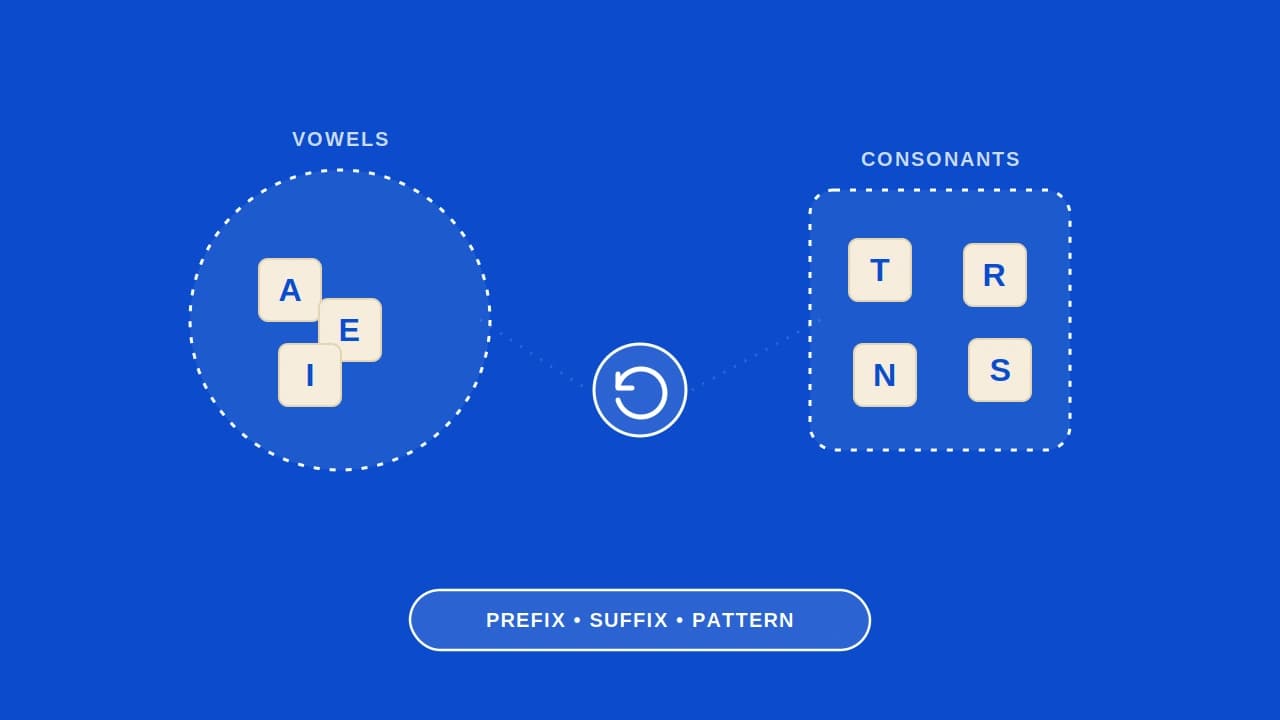
Separate Vowels from Consonants
The alphabet splits into vowels and consonants. Phonetics tells us that most words need both. This is one of the most effective patterns to use when you feel stuck.
Here is how:
- Separate all vowels from consonants into two sets.
- Count the syllables your letters could support.
- Try vowel jumps — place a vowel between consonant clusters.
- Use consonant crossing to test letter combinations.
- Apply syllable sliding — shift syllable blocks around to find word structure.
Moving letters between sets helps you see combinations you would otherwise miss. It reduces the challenge of a large letter group into something smaller and manageable.
Rearrange Letters Systematically
Random guessing wastes time. Instead, rearrange letters using a systematic approach based on letter permutation algorithm logic.
Steps:
- Count the character count of your input.
- Use hashing to mentally group matching letters.
- Apply combinatorics — work through arrangements in order.
- Try brute-force search for short strings: test every possible order.
- Compute possibilities by starting with the most common letter patterns.
String manipulation is the core of this method. Your mind can simulate multiple permutations if you think in letter frequency count order. Force yourself to explore all avenues of thought before giving up.
Practice with Shorter Words First
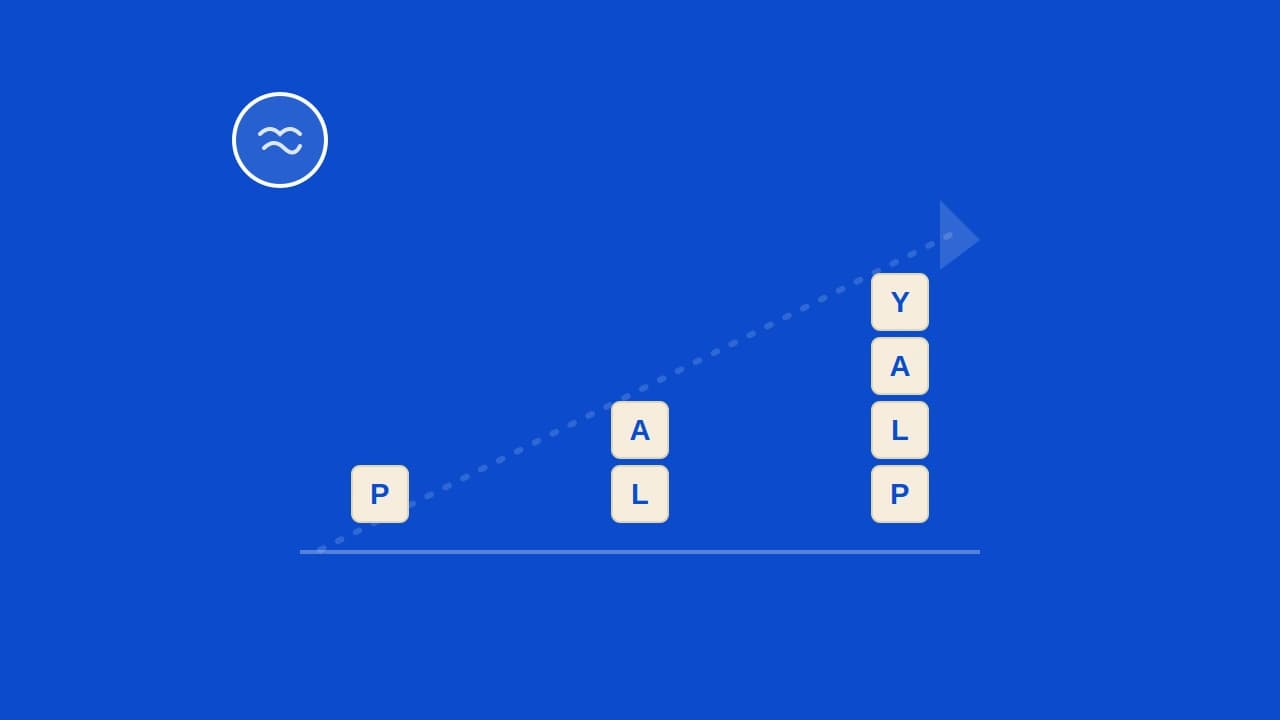
A beginner or novice should start with shorter words. Minimum word length practice builds confidence fast. Single-word anagram puzzles with 3 to 4 letters are a great starting point.
Tips for practice:
- Pick small letter sets — 3 to 5 letters max
- Identify patterns in short words first
- Remove the longest letter groups and solve what remains
- Increase difficulty slowly as your skills grow
- Start with an anagram generator for kids-level challenges
The major issue most people face late in practice is jumping to hard puzzles too soon. Creating a puzzle with multiple solutions helps you see how small changes generate big differences. Challenge yourself consistently, and the skill builds naturally.
Explore Our Word Tools
Looking for specialized tools? Check out our word tools below for every letter game:
Frequently Asked Questions
What is an anagram?
An anagram is a word or phrase formed by rearranging the letters of another word or phrase. Every character from the original is retained. The scrambled letters follow one rule: no additions, no deletions. The disorder creates a new word or phrase while keeping the same letter count. For example, the single term "earth" becomes "heart." It is a core form of wordplay found across many areas of language.
How does the anagram generator work?
The anagram generator uses a fast search algorithm to process your input. It applies string manipulation and brute-force search to explore every possible letter combination. A letter frequency count and character count run automatically in the background. The software then checks every proposed arrangement against a word database and offline word list. Valid dictionary words are identified and returned as instant word generation results. API word lookup supports the process for edge cases. The hashing method limits computing load, so real-time results stay fast and relevant. Sometimes a huge number of potential words exist — the tool filters results to keep them reasonable.
How do you generate all permutations of letters?
Generating all permutations uses combinatorics. A letter permutation algorithm computes every possible arrangement from your character count. For example, 5 letters produce up to 120 arrangements. Brute-force search tests each one, while hashing speeds up the matching process. String manipulation removes duplicate results and keeps the output manageable. The goal is to generate relevant, pronounceable word results — not every random arrangement. Selecting a reasonable limit increases the usefulness of the output. Remove low-value results to increase the quality of what remains.
How do you search for an anagram using wildcards?
Wildcards let you search with incomplete inputs. Enter your known letters in the basic bar, then add wildcard letters or blank tiles for unknown positions. Use the advanced filter to set options for the start and end of a word. Preselect your minimum and maximum sizes to limit the list. The tool discovers all possible words from partial inputs. Simple settings let you include or exclude particular letter positions. Filter results by the beginning or ending letter to narrow down what is returned.
What is an anagrammer?
An anagrammer is a tool, machine, or solver that works as a word rearranger and letter rearranger. It allows users to explore combinations, create puns, solve puzzles, and find new phrases from existing words. The term covers any anagram creator, anagramer, or anagramator — invented for the purpose of decoding scrambled letter sets. This free online finder is one of the best available. It is invaluable for writers, players, and anyone who works with words. The generator, maker, and decoder functions all live inside one indispensable tool.
What are some famous anagrams?
Famous anagrams come from history, pop culture, and trivia games. Many are anagrammatic gems that reveal a hidden message inside a well-known name or phrase. Here is a small collection:
"Tom Marvolo Riddle" → "I am Lord Voldemort"
"William Shakespeare" → "I am a weakish speller"
"Elvis" → "Lives"
"Clint Eastwood" → "Old west action"
Celebrity name anagram results are a hall of fame favorite. The cipher-like fun of these examples makes them wonderful challenges to share. Funny anagrams and secret codes continue to spread across the internet as a form of entertainment and history both. This anagram generator makes it easy to find your own.